
1
/
of
1
Blue Vase Books
The Navajo Code Talkers: The History of the Native American Marines Behind World War II?s Most Uncrackable Code
The Navajo Code Talkers: The History of the Native American Marines Behind World War II?s Most Uncrackable Code
Regular price
$8.87
Regular price
Sale price
$8.87
Unit price
/
per
In stock
Couldn't load pickup availability
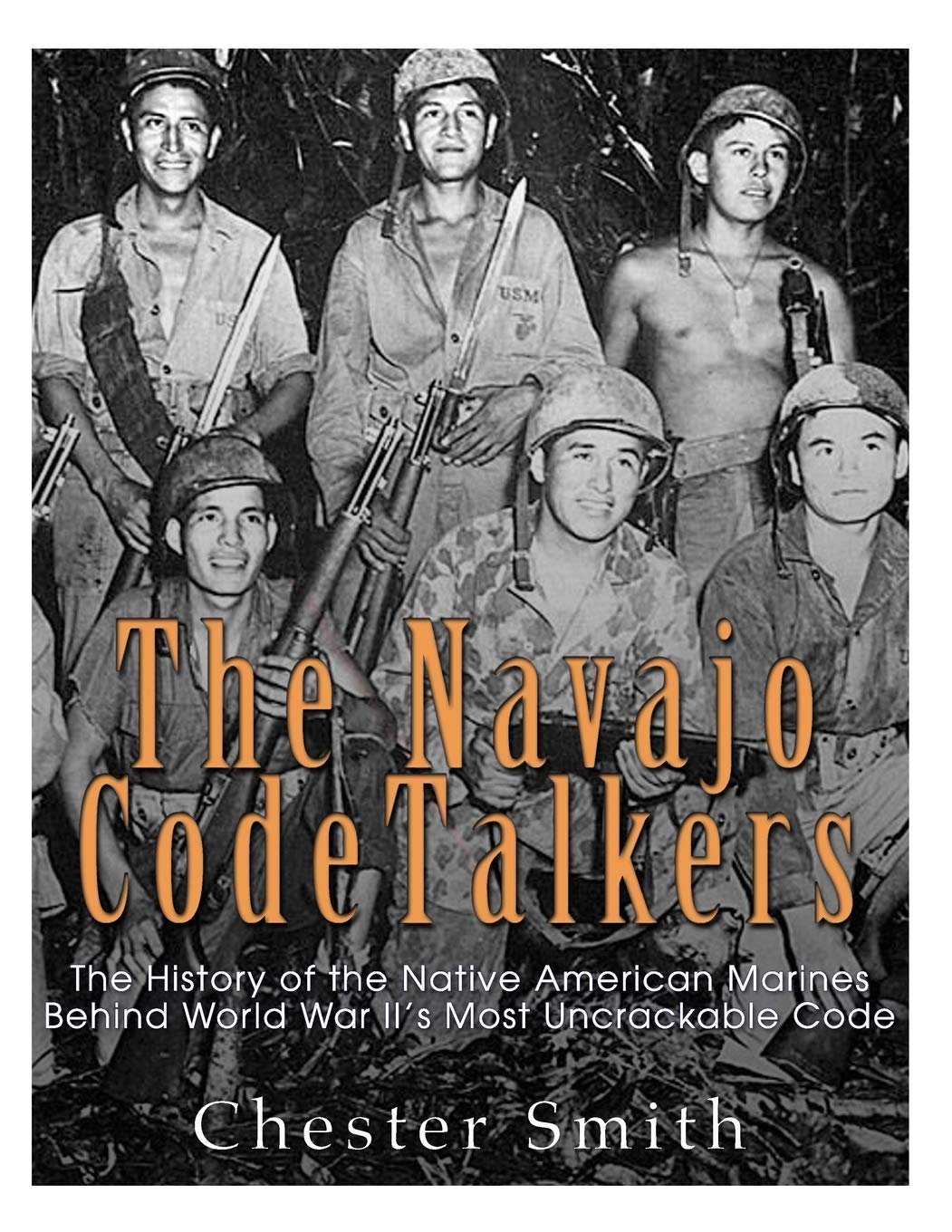
*Includes pictures *Includes footnotes, online resources and a bibliography for further reading *Includes a table of contents One of World War II’s most crucial struggles happened in the realm of the unseen, inside the human mind and amid the invisible flow of radio waves. Every war is a battle of wits as intelligence-gathering, tactics, and strategies clash, from the level of individual action up to the grand, overarching schemes of generals and statesmen. Intelligence took on a freshly urgent aspect in World War II, however, as the fate of offensives, armies, and nations came to hang on the struggle to decrypt vital enemy radio traffic and military communications. During the Second World War, cryptography suddenly became a significant factor in warfare because of mid 20th-century advances in communications technology. With radios small and common enough to be fitted into most individual vehicles and readily carried in a man-portable form, information and orders flowed from supreme headquarters to individual squad leaders, tanks, and soldiers at the front and back again. Complex radio networks connected armies to their other elements almost like a nervous system, making unprecedented tactical and strategic coordination between units hundreds of miles apart not only possible but swift and, in some cases, efficient. Decrypting these signals or protecting their contents from enemy spying became one of the touchstones of victory or defeat. “Information warfare” arrived well ahead of the modern computer and satellite networks. The Allies expended much more effort on decrypting Axis codes than the Axis spent attempting to decipher theirs. Standing on the offensive for much of the war, the Germans felt less need for code-breaking than the Allies. Though they found intelligence useful, it had less value to the Wehrmacht's planners, who needed only moderate detail about enemy movements to plan a successful strategy, while leaving tactics in the highly capable hands of small unit leaders trained to take the initiative and react fluidly to the actual battlefield situation. At a more personal level, the struggle to gain the upper hand in intelligence sometimes resembled the plot of a pulp adventure novel. While much of the hard work occurred in bland offices located in British manor houses, government buildings, or American labs, moments of intense human drama also punctuated the cryptographic struggle as soldiers, spies, and others risked their lives to gain a fresh key to crack a heretofore impenetrable code, or underwent similar risks attempting to keep the secret. During the war, members of the Navajo tribe who still spoke their native language came to the service of the United States by offering a very unique and powerful weapon, the Navajo language. The story of the Navajo code talkers highlights how unaware people are of Native American history. For nearly a century, the Navajo code talkers were forgotten, even by those who were aware of their contribution to America’s role in World War II. Until a movie about them surfaced in 1994, “Navajo Code Talkers: The Epic Story,” the code talkers were virtually unknown. Several movies and documentaries have been made about the Navajo code talkers, and while those are sometimes inaccurate, the story of the courageous and ingenious service the Navajo soldiers provided to the U.S. Marines is told as a source of pride in a number of autobiographies by the original code talkers and their unique contribution to the war effort. It is a unique story about how an elite group of Native Americans defied all odds, overcame the hardships they inherited from their ancestors and became heroes to the American people. The Navajo Code Talkers: The History of the Native American Marines Behind World War II’s Most Uncrackable Code looks at the people and the program that produced behind one of the war’s most legendary aspects.
ASIN: 1523976209
VSKU: BVV.1523976209.A
Condition: Acceptable
Author/Artist:Smith, Chester
Binding: Paperback
Note: Any images shown are stock photographs and product may differ from what is shown.
Condition Notes: The item is very worn but is perfectly usable. Signs of wear can include aesthetic issues such as scratches, dents, worn and creased covers, folded page corners and minor liquid stains. All pages and the cover are intact, but the dust cover may be missing. Pages may include moderate to heavy amount of notes and highlighting, but the text is not obscured or unreadable. Page edges may have foxing age related spots and browning . May NOT include discs, access code or other supplemental materials.
ASIN: 1523976209
VSKU: BVV.1523976209.A
Condition: Acceptable
Author/Artist:Smith, Chester
Binding: Paperback
Note: Any images shown are stock photographs and product may differ from what is shown.
Condition Notes: The item is very worn but is perfectly usable. Signs of wear can include aesthetic issues such as scratches, dents, worn and creased covers, folded page corners and minor liquid stains. All pages and the cover are intact, but the dust cover may be missing. Pages may include moderate to heavy amount of notes and highlighting, but the text is not obscured or unreadable. Page edges may have foxing age related spots and browning . May NOT include discs, access code or other supplemental materials.
SKU:BVV.1523976209.A
Please Note: Gift cards that are purchased in-store, cannot be used online. These must be used in-store.
Shipping & Local Pick Up
Shipping & Local Pick Up
Shipping: Most orders are shipped within 24 hours. Please allow 4-14 days after the item has shipped for delivery. Faster shipping is available for purchase at checkout.
Local Pick Up: Orders will be available for pick up within 24 hours. Pick up at the front desk Thursday-Sunday 10am-6pm .After hours pick ups are available Monday-Wednesday 7am-3pm at the Shipping & Receiving entrance.